Description: Found just outside of Washington D.C. in Bladensburg, Chick Hall’s Surf Club is the last remaining roadhouse in the D.C. area. In addition to serving drinks from the bar, live music is played. This music is a mix of country, jazz, and blues, genres not often heard in bars anymore. Customers are welcome to dance along with the music, or simply play a game of pool on one of the four tables.
Purpose and Main Goal: The club has recently come under new management, and while the new owners have perhaps saved the club from going under, it is still struggling in some respects. Simply getting the word out about what the club has to offer could really help keep it and its style of music alive. I suggest making a documentary as a way to capture what the Surf Club has gone through over time. After making the documentary, a community fundraiser could be organized at the Surf Club where people could come and the documentary would be shown. Copies of the documentary could be sold afterwards.
Public Awareness: This project will let members of the surrounding community see what the club has to offer and hopefully attract customers. Also, customers familiar with the club could make donations at the fundraiser as they reminisce about their memories of the Surf Club.
Sustainability: This project will provide the owners of the Surf Club with the exposure they need to attract more customers and legitimize the club as a community hangout spot. The documentary video could also be posted to the Surf Club’s website sometime after the fundraiser, further increasing the number of people that would see it. Of course, this would broaden the Surf Club’s range of people that know about it and boost business.
Budget: - $300 for advertising, flyers, etc. about the fundraiser
- $200 for blank DVDs
- $1000 for interviews, research, video equipment costs, etc.
Contacts: - James Byrum: current owner of the Surf Club
- Chick Hall, Jr.: son of Chick Hall
- Chris Hall: son of Chick Hall
Historical Significance: The Surf Club is the last club in the area that still specializes in country music. It is reminiscent of an older time when live music in bars was much more common and a sense of community was gained by those who attended the club. As this style of club has become less popular, there is a smaller amount of people who even know about it, let alone go to it. Preserving it is a way of preserving an important landscape and time in American culture.
Sources: - www.surfclublive.com : This is the club’s website, and it contains information on upcoming shows, as well as contact information. - http://www.washingtonpost.com/gog/bars-clubs/chick-halls-surf-club,1026325.html: This is an article by the Washington Post that details the history of the Surf Club.
Wednesday, November 26, 2008

Friday, November 7, 2008
Cultural Landscape Proposal
1. The cultural landscape of Talbot County on Maryland’s eastern shore, for several years, has been populated chiefly by farmers and watermen who lived off of the land around them. They used the land for their own benefit, but were careful to preserve it and not change it into something completely different. The town of Easton in Talbot County served as a central location where a cross-section of the people that inhabited the surrounding area could be found. Key artifacts found here include boats, pickup trucks, and farming equipment such as combines and tractors.
2. In my investigation into the changing landscape of Easton and the Talbot County area as a whole, I will use the axiom of landscape as clue to culture as well as the historic axiom described by Lewis. I plan to use these to better understand the history of the area as well as reasons for the importance placed on objects, traditions, and practices used by the people of Talbot County. In addition, I will draw from Korr’s model. In particular, I will use the section on perceptions in an attempt to determine what people from the area as well as people from outside of the area believe the landscape means.
3. Works Cited
Burgoyne, Mindie. Easton. Grand Rapids: Arcadia, 2007.
(This source contains photographs of famous landmarks in and around Easton, including those that are not there anymore. This will help me explore the historic axiom detailed by Lewis and give me a sense of the how Easton’s landscape has changed over time.)
Claggett, Laurence. Easton. Grand Rapids: Arcadia, 1999.
(Similar to the above source, this book shows how Easton was in years past, giving an idea of how the area has changed over the years.)
Hunt, Shirley H. The Vanishing Landscape.
(This source takes a look at not only Talbot County, but the rural landscape of America and how it has been slowly disappearing, giving way to urbanization.)
Prade, Joy. "Easton backs east-west connector." The Star Democrat 26 Sept. 2008.
(This newspaper article is a current look at the politics and decisions being made to transform Easton into a larger, commercial business driven area as opposed to one driven by agriculture.)
Tietjen-Smith, Tara, Lee Waller, Jason Davis, and Michael Copeland. "Urban versus Rural Community Colleges: A National Study of Student Gender and Ethnicity." Empirical Research 6 (2008). 13 Oct. 2008. 7 Nov. 2008.
(This academic journal examines several differences between rural and urban landscapes and why urbanization is a growing trend in several areas, not just Talbot County.)
4. The town of Easton has become the epicenter for a cultural shift in Talbot County, one that favors urbanization over rural areas. This trend can be seen across the United States, and is not limited to the Talbot County area.
2. In my investigation into the changing landscape of Easton and the Talbot County area as a whole, I will use the axiom of landscape as clue to culture as well as the historic axiom described by Lewis. I plan to use these to better understand the history of the area as well as reasons for the importance placed on objects, traditions, and practices used by the people of Talbot County. In addition, I will draw from Korr’s model. In particular, I will use the section on perceptions in an attempt to determine what people from the area as well as people from outside of the area believe the landscape means.
3. Works Cited
Burgoyne, Mindie. Easton. Grand Rapids: Arcadia, 2007.
(This source contains photographs of famous landmarks in and around Easton, including those that are not there anymore. This will help me explore the historic axiom detailed by Lewis and give me a sense of the how Easton’s landscape has changed over time.)
Claggett, Laurence. Easton. Grand Rapids: Arcadia, 1999.
(Similar to the above source, this book shows how Easton was in years past, giving an idea of how the area has changed over the years.)
Hunt, Shirley H. The Vanishing Landscape.
(This source takes a look at not only Talbot County, but the rural landscape of America and how it has been slowly disappearing, giving way to urbanization.)
Prade, Joy. "Easton backs east-west connector." The Star Democrat 26 Sept. 2008.
(This newspaper article is a current look at the politics and decisions being made to transform Easton into a larger, commercial business driven area as opposed to one driven by agriculture.)
Tietjen-Smith, Tara, Lee Waller, Jason Davis, and Michael Copeland. "Urban versus Rural Community Colleges: A National Study of Student Gender and Ethnicity." Empirical Research 6 (2008). 13 Oct. 2008. 7 Nov. 2008
(This academic journal examines several differences between rural and urban landscapes and why urbanization is a growing trend in several areas, not just Talbot County.)
4. The town of Easton has become the epicenter for a cultural shift in Talbot County, one that favors urbanization over rural areas. This trend can be seen across the United States, and is not limited to the Talbot County area.
Wednesday, October 22, 2008
Home on the Shore
To me, the place I consider home is the Eastern Shore of Maryland. It’s where I was born and where I’ve spent the greater part of my life. I have many fond memories that have come from there, and that plays a big part in why I gain a sense of being home when I’m there. Not only does my family live on the Eastern Shore, but many members of my extended family reside there as well. Although I feel comfortable and relaxed there, the idea of a specific location is more important to my definition of home than a feeling or emotion. For example, even though I can be comfortable and relaxed in my apartment, I don’t consider it my “home.” I don’t have any real attachment to it; it merely serves as the place I stay when I’m not in class. The Eastern Shore, however, gives me an identity and provides me with the place I go to see my family.
Friday, September 19, 2008
Messenger Bags: Different for the sake of being different
The messenger bag was originally used by postal workers, bicycle couriers, and even as far back as Pony Express riders. It was used primarily because it easily allowed those workers access into the contents of their bag. In the case of bike couriers, this proved very useful, as the worker could deliver newspapers and other items while still riding their bike.
The messenger bag falls into the larger system of ‘bags’. Other objects that fall into this category include purses and backpacks. The use of messenger bags by students has become popular in recent years, with some students opting to use a messenger bag over a backpack. I wonder why this has become the case, however, as backpacks perform the same primary function that messenger bags do: carrying one’s belongings. Surely the majority of students in college now had backpacks to carry their books in high school, so there is no imminent need for a messenger bag in college. Most students that have messenger bags in college don’t ride bikes, so there is no need for the ability to dispose of the bag’s items quickly while still riding a bike. Also, messenger bags distribute their weight unevenly, making them a possible health risk and inferior to backpacks in this respect.
Students that use messenger bags feel as if they must stand out from the crowd by using an object that is different from the norm. However, this object provides no functional advantages over a backpack, and ultimately becomes a useless purchase on the part of the student.
The messenger bag falls into the larger system of ‘bags’. Other objects that fall into this category include purses and backpacks. The use of messenger bags by students has become popular in recent years, with some students opting to use a messenger bag over a backpack. I wonder why this has become the case, however, as backpacks perform the same primary function that messenger bags do: carrying one’s belongings. Surely the majority of students in college now had backpacks to carry their books in high school, so there is no imminent need for a messenger bag in college. Most students that have messenger bags in college don’t ride bikes, so there is no need for the ability to dispose of the bag’s items quickly while still riding a bike. Also, messenger bags distribute their weight unevenly, making them a possible health risk and inferior to backpacks in this respect.
Students that use messenger bags feel as if they must stand out from the crowd by using an object that is different from the norm. However, this object provides no functional advantages over a backpack, and ultimately becomes a useless purchase on the part of the student.
Paper 1 Thesis Statement

When a person puts on a replica of a professional sports jersey, they sacrifice their own identity for the opportunity to be linked to the glory and fame of a professional athlete.
Tuesday, September 2, 2008
It Runs In The Family
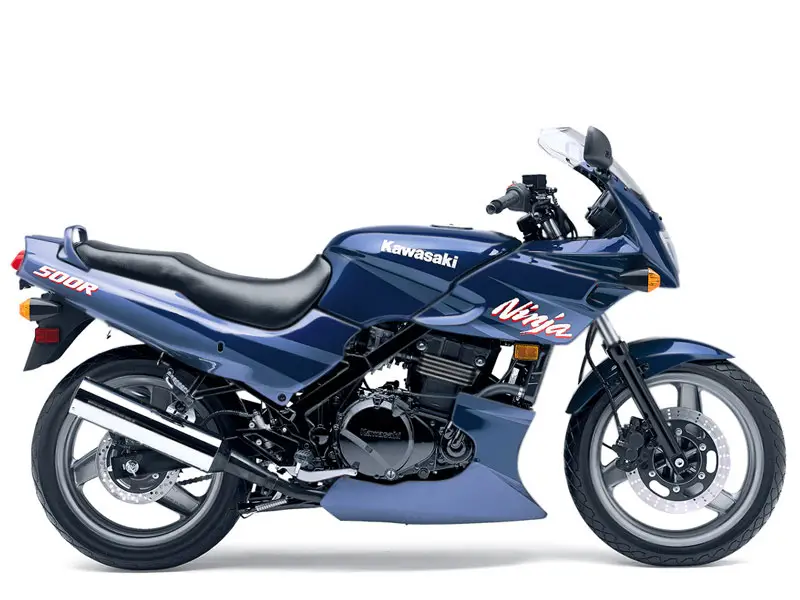
Motorcycles have been a part of my life for as long as I can remember. My grandfather used to have an old Harley Davidson, and my father grew up riding many different bikes, including Bridgestones, Hondas, and Kawasakis. By the time my brother and I were old enough to ride, my father already had some bikes for us to use. They were old Bridgestones that he had found on eBay and he fixed them up for us. We spent a lot of time with them, but eventually we wanted something a little bigger and a little faster. We both bought sportbikes (motorcycles similar to those used in races) from local dealers; a Honda CBR for my brother and a Kawasaki Ninja for me.
For me, my motorcycle is not just a means of transportation. It is a symbol that shows the bond that I share with my father, brother, and anyone else that rides. It is something that makes me different from a lot of people, and yet allows me to be included in a larger cultural group, providing me with a unique identity.
Subscribe to:
Posts (Atom)
